
Disc-related terms
Bulging disc · Herniated disc · Degenerative disc disease
FREE GUIDE · 52-PAGE PDF
You’ve been given a name for your back pain. But what does it actually mean?
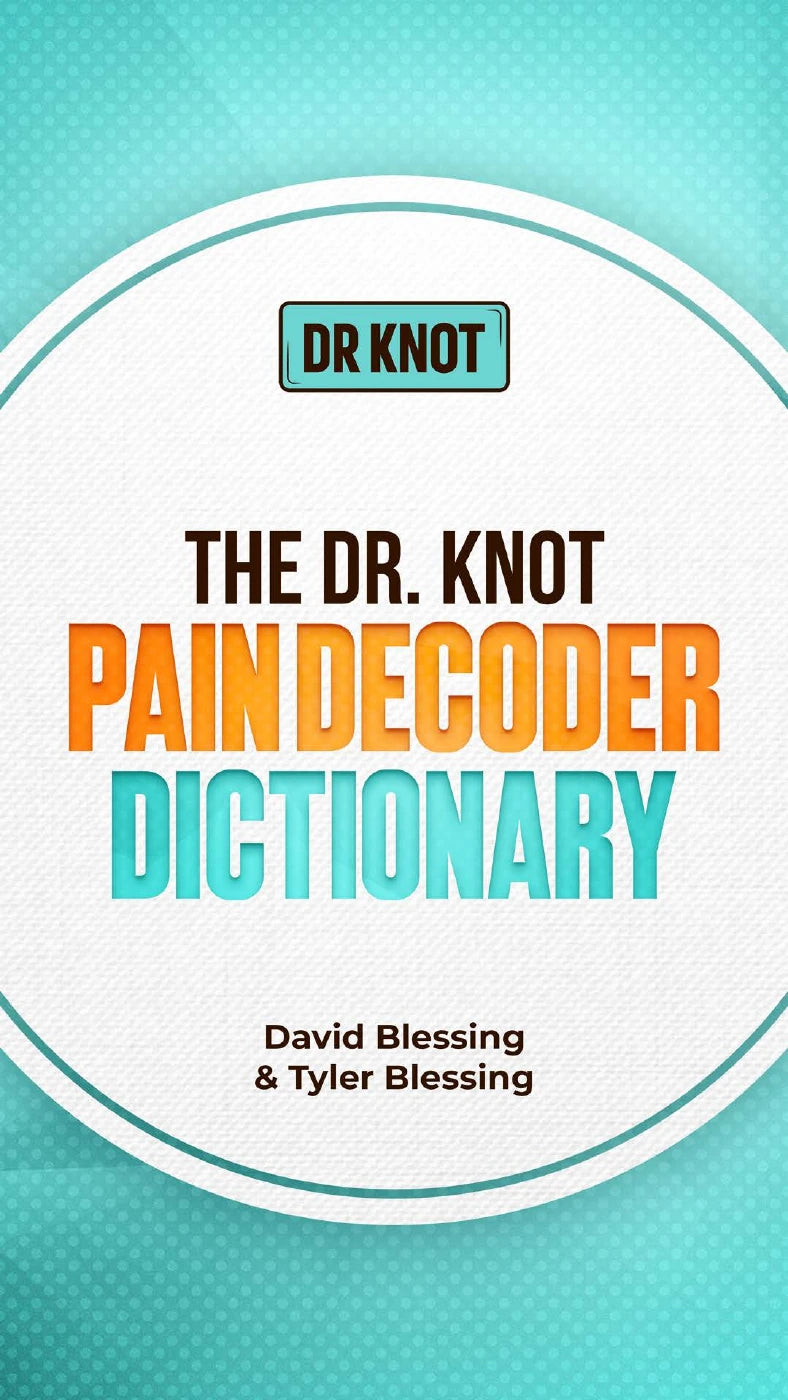
The Dr. Knot Pain Decoder Dictionary helps you make sense of common back-pain terms, with plain-language explanations and anatomy overviews you can return to.
Get My Free DictionaryFree PDF reference · Read at your own pace
WHEN A DIAGNOSIS LEAVES YOU WITH QUESTIONS
You hear a term in an appointment. See it in a report. Read it in an article. Then you’re left trying to piece together an explanation.
This dictionary gives you one place to start understanding the language—so you can follow the conversation and ask more specific questions about your own situation.
A LOOK INSIDE
The guide groups common terms into sections, with anatomy overviews, explanations, and summaries.
Bulging disc · Herniated disc · Degenerative disc disease
SI joint dysfunction · Facet joint syndrome · Spondylolisthesis
Sciatica · Lumbar radiculopathy · Spinal stenosis
Osteoarthritis · Bone spurs · Facet joint arthritis
No anatomy background needed. Start with a term you want to understand.
ONE TERM AT A TIME
Look up a word from an appointment, a report, or something you’re reading.
Use the explanation and anatomy overview to get more familiar with the language.
Write down what you want your healthcare professional to explain about your situation.
A QUESTION TO TAKE WITH YOU
“How does this finding relate to my symptoms, and what should I do next?”

FROM DAVID & TYLER BLESSING
We created Dr. Knot to help people make more sense of recurring lower back pain and choose a clearer next step.
The Pain Decoder Dictionary is a place to return when the language gets in the way. Keep it nearby as you read, learn, and prepare questions.
David & Tyler Co-founders, Dr. Knot
YOUR FREE REFERENCE
Get the Dr. Knot Pain Decoder Dictionary and keep a plain-language reference within reach.
Enter your email to receive your copy.
BEFORE YOU DOWNLOAD
A digital copy of the 52-page Dr. Knot Pain Decoder Dictionary, with common back-pain terms organized into topic sections.
No. The guide includes anatomy overviews and explanations written for readers who want to become more familiar with back-pain terminology.
A general reference cannot determine the cause of your symptoms. Use it to understand language and prepare questions. Your healthcare professional can explain how a diagnosis or finding relates to your own situation.
No. It is an educational reference. It does not replace medical evaluation, diagnosis, or treatment.